

How AECO teams can reduce rework, protect project margins, and keep information moving from design through closeout.
The field team flags an issue in a PDF markup. A project engineer copies it into the general contractor’s platform. The design team answers by email, and someone updates the internal tracker. Weeks later, the project manager has to piece together which response was approved and whether it made it into the issued drawings.
Each step takes time. Across a project, those steps also make it easier for teams to act on different versions of the same information. When a decision affects scope, schedule, or cost, reconstructing the record can become a project risk in its own right.
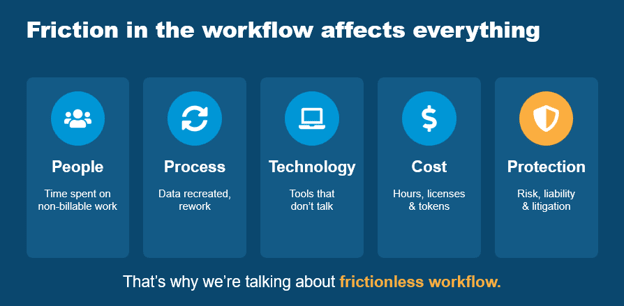
Frictionless Flow means removing unnecessary work from the way project information moves. Teams capture information where the work happens, then make it available to the people and systems that need it. A designer can work in a familiar design tool while the contractor and owner receive the information they need in their required platforms.
Find the handoffs that cost you the most
Look at the points where work changes hands between disciplines, between the office and the field, and between design, construction, and operations. A task that takes five minutes can be expensive when it happens hundreds of times or delays a team waiting on a decision.
Start with a recent project. Ask leadership, IT, project managers, and the people doing the work to walk through how a drawing, issue, or approval actually moves. Document where it starts, who owns it, which systems it passes through, and where someone has to re-enter or reconcile information. Include the spreadsheets, inboxes, and shared folders that teams use to keep the process moving.
Pay particular attention to the handoffs that depend on one person, the approvals that are hard to trace, and the information the owner needs at closeout. These are places where a small workflow change can reduce both administrative effort and project risk.
Connect, automate, and integrate where it makes sense
- Connect project information. Bring relevant correspondence and markups into the project record so teams can find the context behind a decision. For example, a project manager reviewing a field issue should be able to find the original markup and the approved response.
- Automate repeatable tasks. Schedule recurring exports, drawing publishing, and model health checks. Use automated CAD standards checks to flag issues during production, while the team still has time to correct them before a submission.
- Integrate systems that need to stay in sync. When your team works in Autodesk Forma and a contractor requires Procore, agree on which records should move between platforms, who owns each record, and how revisions are handled. This gives teams a way to meet project requirements with less duplicate entry.
The same work can prepare your organization to use AI more effectively. A project briefing tool, for example, can draw from schedule updates, open issues, and correspondence so a principal can prepare for a client meeting. Its usefulness depends on whether those records are current, accessible to the right people, and traceable to their sources.
Prove the value on one workflow
Choose a workflow that happens often enough to measure and matters enough to improve. For a markup-to-RFI pilot, track how many times information is entered, how much staff time it takes to prepare and route an RFI, and how often a record is missing context. Run the pilot on one project, then compare the results with your baseline.
Use what you learn to decide whether to expand. A faster handoff is worth scaling when it also gives the next team the information it needs and leaves a record the project manager can rely on. If you can show that with one workflow, you have a stronger business case for the next investment.
Where is your team doing the same work twice? IMAGINiT can help you map that workflow, evaluate where automation or integration would help, and define how to measure the results. Contact us to map one workflow together.


