A missing measurement can cost a utility far more than another trip to the field. It can require coordinating site access, scheduling an escort, redirecting engineering resources, and delaying a design decision. When the same information gap surfaces during construction, the consequences can include contractor downtime, field changes, and pressure on an already limited outage window.
For utility leaders, improving field data collection is therefore a question of project economics: How much time and money does the organization spend obtaining, verifying, and revisiting existing conditions?
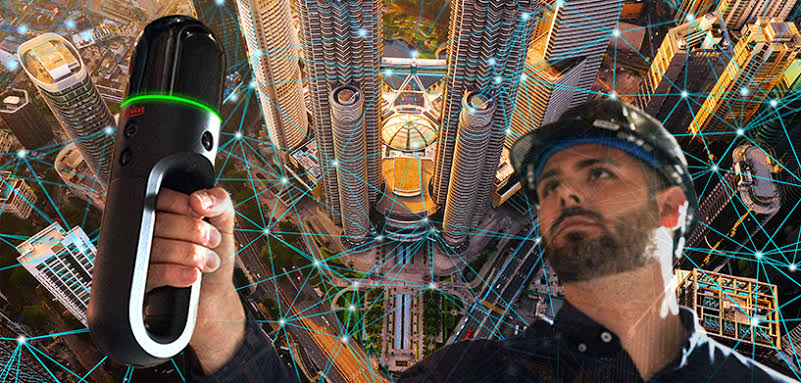
Autonomous scanning offers a way to address that cost. By capturing site geometry with a scanner mounted on a compatible robotic carrier, utilities can evaluate opportunities to reduce manual collection effort and make more site information available for project planning. Leica’s BLK ARC, for example, supports autonomous mobile laser scanning and repeatable scan missions with compatible robots.
The strongest business case starts with the work that better information can eliminate.
Find the Full Cost of a Site Visit
The time spent taking measurements is only one component of field documentation costs. A visit to a substation, pumping facility, or generating plant may also involve travel, access approvals, safety briefings, operating personnel, and coordination with contractors.
If engineering later discovers that a critical dimension or adjacent area was missed, much of that effort may have to be repeated.
Consider a substation upgrade where the design team needs to understand equipment arrangements and available space for new components. A sufficiently complete, validated point cloud can allow multiple disciplines to review visible existing conditions from the office. Questions about surrounding structures or equipment relationships may be answered from the same dataset instead of triggering separate visits.
That does not eliminate every field verification requirement. It creates an opportunity to reserve site visits for work that requires a physical presence.
Use Better Existing-Conditions Data to Protect Project Budgets
Incomplete records create uncertainty that travels through a project. Designers make assumptions, estimators add contingencies, and contractors discover discrepancies after mobilization.
Capturing existing conditions earlier gives teams an opportunity to identify spatial conflicts before they become construction problems. For example, a pumping station retrofit may require coordinating new piping with existing supports, access routes, and equipment. Reviewing those relationships digitally can help teams investigate installation constraints before materials arrive.
The financial benefit depends on whether the information changes a decision. A scan that helps revise an equipment arrangement before fabrication has a different value from one that is collected and stored without being used.
Utilities should connect each capture effort to a specific project need, such as validating a proposed layout, supporting retrofit design, or preparing an installation sequence.
Make Limited Access Windows More Productive
Some utility projects depend on tightly managed access periods. When teams arrive with unresolved questions, valuable time can be consumed confirming conditions that could have been reviewed beforehand.
A current digital record can support preconstruction discussions, contractor orientation, and planning for material staging or equipment removal. With more questions resolved in advance, teams can use the access window more deliberately.
Autonomous scanning may also offer opportunities to collect information with less interference in operating areas. However, the feasibility depends on the site, the robotic carrier, the capture requirements, and operating restrictions. It should never be assumed that scanning eliminates a shutdown or permits access to an energized or otherwise restricted area.
The practical objective is to reduce avoidable disruption while working within the utility’s established controls.
Build an ROI Model Around Avoided Work
A useful business case should compare the current process with the complete proposed workflow, including data processing and delivery.
Start with three categories:
- Field effort: Crew hours, travel, escort time, and repeat mobilizations.
- Engineering effort: Time spent finding records, requesting clarification, and resolving missing information.
- Project impacts: Documented field changes, contractor standby, or delays attributable to inaccurate existing-conditions information.
For illustration, assume a utility avoids 20 repeat documentation visits annually. If each visit requires two employees for five hours, including travel, at a combined burdened rate of $100 per person-hour, the avoided labor represents $20,000 annually.
That figure is gross labor capacity value, not net savings. Equipment or service costs, processing, training, maintenance, and data management must still be included. Recovered employee time also becomes a cash saving only when it reduces an actual expense; otherwise, its value lies in additional work the team can complete.
Evaluate project savings separately and avoid counting the same avoided activity twice.
Prove the Workflow Before Expanding It
A focused pilot should answer whether the technology improves a recurring business process.
Select a facility with upcoming work and a known documentation challenge. Define the required coverage, accuracy, deliverables, and acceptance criteria before capture. Then measure total field effort, turnaround to usable data, follow-up visits, and engineering use.
The most valuable outcome is evidence that teams can make a necessary decision with less effort or fewer surprises.
IMAGINiT works with utilities to align autonomous scanning with their field workflows. A practical starting point is to identify where repeat visits and incomplete site information are creating the greatest project friction.
Talk with an IMAGINiT Utilities expert about evaluating reality capture opportunities that can reduce field effort and improve project predictability.